

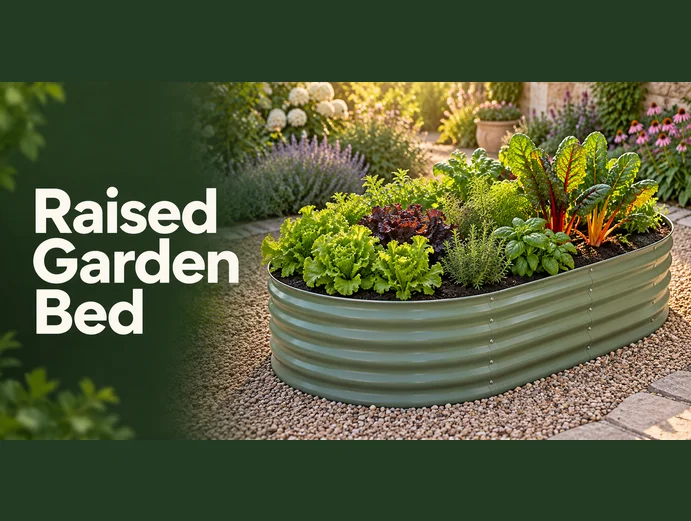
A raised garden bed gives you more control over soil, drainage, access, and planting conditions. It can work particularly well in UK gardens with heavy clay, poor ground, or limited growing space. Careful sizing and filling matter more than making the structure unnecessarily tall.
Quick answer: A raised growing area is an enclosed section of soil positioned above the surrounding ground. For most UK gardens, choose a sunny site, keep it within comfortable reach, ensure good drainage, and fill it mainly with quality topsoil enriched with organic matter. Match the final depth to what you plan to grow.
| Decision | Practical UK starting point | Why it matters |
|---|---|---|
| Position | Sunny, accessible, and near water | Most food crops need good light. |
| Width | Usually no more than 1.2–1.5m | Let you reach the center without standing on soil. |
| Depth | Around 30cm for shallow crops; deeper for larger plants | Different roots need different soil volumes. |
| Materials | Timber, brick, stone, or recycled plastic | Cost, appearance, and lifespan vary. |
| Filling | Mainly topsoil with organic matter | Reduces excessive settling |
| Paths | At least 45cm where practical | Helps with access and wheelbarrows |
| Watering | Check more often during dry periods. | Elevated soil can dry faster. |
| Maintenance | Add organic matter periodically. | Replaces nutrients and supports soil structure |
Key Takeaways
- Plan the location before buying timber, soil, or a kit.
- Keep the growing area narrow enough to reach from the sides.
- Use topsoil as the main filling material rather than pure compost.
- Match soil depth to the crops you intend to grow.
- Avoid blocking drainage at the base.
- Expect more frequent watering during warm, dry weather.
- Remove troublesome perennial weeds before construction.
- Choose materials according to lifespan, cost, and garden style.
Why Raised Growing Areas Work Well in UK Gardens
British gardens can vary sharply in soil quality over short distances. Heavy clay may remain wet through winter, while new-build plots sometimes contain compacted or disturbed ground. Elevating the growing zone allows you to create more predictable soil conditions.
Drainage is another important reason gardeners choose this approach. The RHS notes that elevating the growing area can help where natural soil is prone to waterlogging. It also makes soil type easier to tailor for vegetables, fruit, flowers, and other plants.
Accessibility can improve as well, particularly when bending or kneeling becomes uncomfortable. Higher structures bring the working surface closer to the gardener. They can also create clearer paths around productive areas.
How to Choose the Best Position
Start by watching sunlight across the garden before fixing the location. Most vegetables and fruit crops perform better with generous direct light. Avoid placing permanent structures beneath dense tree canopies where shade and root competition can become problems.
Also consider daily access. A productive area positioned close to a water source is easier to maintain during dry spells. It should also sit somewhere you can reach without repeatedly crossing muddy or awkward ground.
Garden layout matters because the structure will be difficult to move after filling. Soil becomes extremely heavy in volume, even in a modest frame. Wrynia’s UK garden design guide can help you plan paths, planting zones, seating, and other permanent features first.
Raised Garden Bed Size and Depth: What Works Best?
Width is usually more important than overall length. The RHS recommends keeping beds below about 1.5 meters wide where you need access from both sides. That helps you reach the center without stepping onto the soil and compacting it.
Depth depends on the intended planting. Around 30cm can suit salad crops, strawberries, and other comparatively shallow-rooted choices. Larger shrubs, fruit plants, and deeper-rooted crops benefit from greater soil depth.
Paths should also be planned before construction begins. Around 45cm can provide basic wheelbarrow access, according to RHS guidance. Wider routes may be needed where wheelchair access is required.
Which Material Should You Choose?
Timber remains popular because it is simple to cut, assemble, and adapt. Pressure-treated softwood and sleepers can last longer than basic untreated boards. Check any treatment guidance carefully when the structure will contain edible crops.
Brick and stone can last much longer and may suit permanent garden schemes. They normally cost more and can require stronger construction skills. Taller masonry structures may also require suitable foundations for stability.
Recycled plastic is another option for gardeners who want low maintenance. It resists rot and avoids regular timber treatment. Its appearance and upfront cost may not suit every garden or budget.
| Material | Main advantage | Main drawback | Good fit for |
|---|---|---|---|
| Timber | Easy DIY construction | Eventually deteriorates | Most domestic gardens |
| Sleepers | Strong and substantial | Heavy to move | Larger permanent layouts |
| Brick | Durable and neat | Labor and foundation work | Formal garden designs |
| Stone | Long-lasting appearance | Usually expensive | Premium permanent beds |
| Recycled plastic | Rot-resistant | Higher purchase cost | Low-maintenance projects |
How to Build a Simple Raised Garden Bed
A straightforward timber structure can be completed with basic DIY tools. Measure everything before cutting because small errors can leave the frame twisted. Use exterior-grade fixings suitable for the timber you select.
- Mark the position. Measure the length and width, then check access around every side.
- Clear the ground. Remove persistent weeds, large stones, waste, and unwanted roots.
- Level the base. Correct obvious high spots so the frame sits securely.
- Cut and assemble the frame. Secure corners firmly and check that they remain square.
- Add extra support where needed. Long sides may bow once the soil presses on them.
- Check drainage. Do not create an impermeable base that traps water around roots.
- Fill in layers. Add suitable soil materials and allow them to settle before planting.
Gardeners preparing a neglected plot should remove established perennial weeds before major cultivation. Chopping some persistent roots into smaller fragments can spread the problem instead of solving it. Wrynia’s rotavator guide for UK gardens explains when mechanical cultivation is useful and when it can cause difficulties.
What Should You Fill It With?
Avoid filling a deep structure entirely with multipurpose compost. Compost gradually breaks down and loses volume, which can leave the surface sinking significantly. The RHS recommends using soil as the main component, then enriching it with suitable organic matter.
Quality topsoil provides the bulk and long-term structure. Garden compost, leaf mold, or well-rotted manure can improve fertility and moisture management. Sharp horticultural sand can help where planting requires better drainage.
Very deep structures do not necessarily need premium growing soil from bottom to top. The lower section can sometimes contain suitable subsoil or other appropriate bulk material. Keep the productive upper root zone filled with the best growing mixture you can reasonably provide.
What Can You Grow?
Leafy salads are useful starter crops because they mature quickly and need limited root depth. Radishes, spring onions, beetroot, carrots, herbs, spinach, and dwarf beans can also work well. Crop selection should always reflect the available sunlight and soil depth.
Courgettes and similar larger vegetables need much more room than their seedlings suggest. Give spreading plants enough space rather than packing every empty patch. Overcrowding restricts airflow and makes watering, harvesting, and pest checks harder.
You can also combine edible and ornamental planting. Herbs, chard, strawberries, nasturtiums, and compact flowers can make productive areas visually attractive. Wrynia’s garden planning ideas offer more ways to connect edible growing with the wider garden.
Watering and Seasonal Care
Elevated growing areas can dry faster than surrounding ground. Check soil moisture during prolonged warm or windy weather rather than following a fixed watering calendar. Water deeply enough to reach roots instead of repeatedly wetting only the surface.
Mulching can reduce moisture loss while protecting the soil surface. Garden compost, leaf mold, or another suitable organic mulch can also add organic material as it breaks down. Leave plant stems clear where constant dampness could cause problems.
Nutrients need replacing when you repeatedly harvest vegetables from the same limited soil volume. Add suitable organic matter between growing seasons and follow crop-specific feeding guidance. Rotate crop groups where practical to make management easier.
Common Mistakes to Avoid
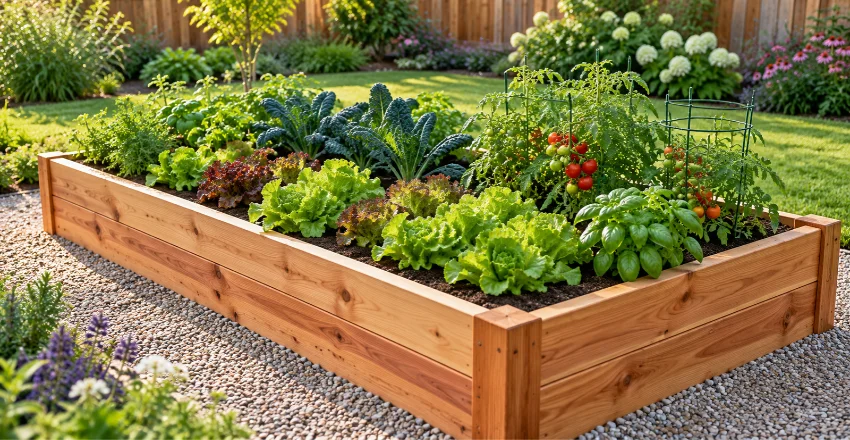
Making the structure too wide is one of the simplest design mistakes. If you cannot reach the center comfortably, you may eventually step onto the soil. That defeats one of the main benefits because foot traffic compacts the growing surface.
Poor weed preparation can create another long-term problem. Remove persistent weeds before the frame blocks access to their roots. For established problems elsewhere in the garden, Wrynia’s UK weed-control guide compares chemical and non-chemical approaches.
Do not assume a taller structure is automatically better. Extra height requires considerably more soil and usually increases the project cost. It can also dry out faster in warm weather.
Is a Raised Bed Better Than Planting in the Ground?
Neither option wins in every garden. Healthy, free-draining ground can produce excellent vegetables without any surrounding frame. The real advantage comes when elevation solves a specific problem involving access, drainage, soil quality, or garden organization.
Traditional ground-level planting also costs less because you do not need construction materials or large quantities of imported soil. Established natural soil can retain moisture longer during dry periods. For gardeners with suitable ground, simple beds may therefore be the more economical solution.
A raised structure becomes more compelling when conditions are difficult, or space needs clearer organisation. It can turn an awkward corner into a manageable productive area. Browse Wrynia’s Home Improvement guides when planning related outdoor or household projects.
Frequently Asked Questions
How deep should a raised garden bed be?
Around 30cm can support many shallow-rooted crops, including salads and strawberries. Larger plants may need 45cm or more, depending on their root systems. Always match depth to the crops rather than choosing one measurement for every planting plan.
Should I put cardboard underneath?
Cardboard is sometimes used when starting no-dig growing areas over weedy ground. It can suppress some surface growth while organic material is added above. You should still deal with persistent perennial weeds carefully before construction.
Should I line the inside?
A side lining can separate moist soil from timber and may extend the timber’s usable life. The base should still allow effective drainage rather than trapping water. Always choose materials appropriate for the crops and construction method.
Can I build one on paving or concrete?
Yes, but drainage becomes more important on impermeable surfaces. The RHS advises providing drainage holes and adjusting the growing medium accordingly. Deeper soil may also be required where roots cannot extend into natural ground beneath the structure.
Do raised beds need more watering?
They can dry faster than beds at natural ground level. Warm weather, wind, soil composition, and plant size all affect watering demand. Check the soil itself instead of watering automatically every day.
Plan the Bed Around the Garden, Not the Other Way Around
A successful raised garden bed starts with location, access, drainage, and realistic planting goals. Choose a size you can comfortably reach and fill it with soil designed for long-term use. Those decisions matter more than buying the tallest or most expensive structure.
Sketch the layout before ordering materials. Calculate the soil volume, check water access, and decide what you intend to grow. A few minutes of planning can prevent costly changes after several hundred litres of soil are already in place.