

Good garden design ideas should make your outdoor space attractive, useful, and easier to maintain. UK gardens also need to handle shade, rain, changing seasons, and increasingly dry summer periods. The best designs begin with how you want to use the space.
Quick answer: Start with a simple layout based on seating, movement, planting, and storage. Choose plants suited to your soil and available light. Then add privacy, lighting, wildlife features, and durable surfaces that suit the British climate.
| Design decision | Practical UK approach |
|---|---|
| Layout | Divide the garden into two or three useful zones |
| Small spaces | Use vertical planting and longer sightlines |
| Planting | Choose plants for soil, light, space, and mature size |
| Maintenance | Reduce demanding lawns and unnecessary containers |
| Privacy | Use planting, screens, pergolas, or small trees |
| Drainage | Prefer permeable surfaces where practical |
| Wildlife | Add diverse planting, water, and shelter |
| Seating | Position it for sunlight, shade, views, and privacy |
| Lighting | Light paths, steps, seating, and selected plants |
| Year-round appeal | Mix evergreen structure with seasonal planting |
Key Takeaways
- Design around how you will use the garden before buying plants.
- Create clear zones without filling every available metre.
- Work with British weather rather than designing only for summer.
- Use layered planting to create depth, privacy, and seasonal colour.
- Reduce maintenance through sensible plant and surface choices.
- Make small gardens feel larger by controlling views and sightlines.
- Include wildlife, drainage, and water use from the planning stage.
15 Garden Design Ideas That Work in UK Homes
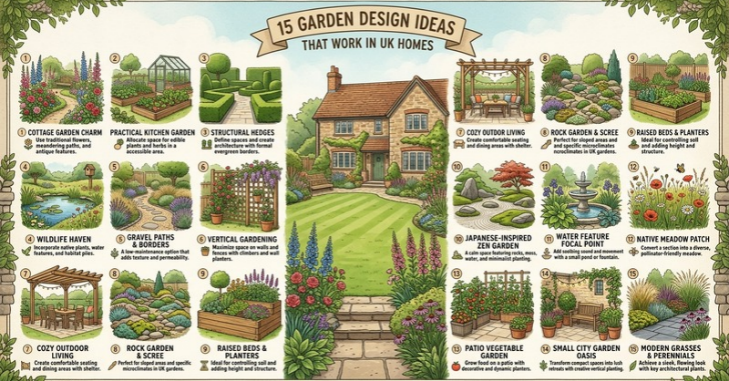
A successful layout does not require a large garden or expensive landscaping. Good planning can improve a terrace, suburban lawn, courtyard, or narrow new-build plot. These ideas can be adapted to different budgets and garden sizes.
1. Decide What Your Garden Needs to Do
Begin by listing the activities that matter most to your household. You might want outdoor dining, children’s space, gardening, entertaining, or somewhere quiet to read. Prioritising two or three purposes prevents the layout from becoming crowded.
Measure the plot before choosing permanent features. Mark doors, windows, drains, sheds, trees, and awkward changes in level. These details determine where larger features can work comfortably.
2. Divide the Space Into Useful Zones
Zoning can make one garden perform several different jobs. A patio might handle dining, while a planted corner provides a quieter retreat. Another area can hold storage, growing beds, or children’s equipment.
Avoid dividing the garden with too many solid barriers. Changes in paving, planting, furniture, or level can define areas without closing them off. This approach helps compact gardens retain a sense of space.
3. Make a Small Garden Feel Larger
Small UK gardens benefit from strong sightlines and carefully chosen focal points. A path, specimen plant, sculpture, or bench can draw your eye towards the far boundary. Partially hidden areas can also make the plot feel deeper.
Use vertical surfaces instead of relying entirely on ground space. Climbers, wall planters, narrow trellis, and trained fruit can provide greenery without consuming valuable floor area. The RHS also recommends making effective use of containers in restricted spaces.
4. Plan Seating Around the Sun
Watch how sunlight travels across the garden before positioning permanent seating. A sunny breakfast spot may become uncomfortable during a hot afternoon. Meanwhile, evening seating can feel cold when placed in permanent shade.
Many gardens benefit from two modest seating areas instead of one large patio. One can capture morning light while another works later in the day. Flexible furniture makes this approach possible without excessive paving.
5. Use Planting to Soften Hard Boundaries
Bare fences can make narrow gardens feel enclosed. Climbers, shrubs, ornamental grasses, and small trees break up those straight lines. Layered planting also creates a stronger sense of depth.
Choose plants according to their mature size rather than their size at purchase. This reduces overcrowding and unnecessary pruning later. It also helps each plant develop a more natural shape.
6. Design for Lower Maintenance
Low maintenance does not mean removing most plants from the garden. Better results usually come from simplifying repeated jobs. The RHS recommends matching features and planting with the time you can realistically provide.
Consider reducing demanding lawn areas if mowing takes too much time. Shrubs, ground-cover plants, gravel, paths, and planted borders can reduce repetitive work. Keep features requiring regular attention close to the house or water supply.
For existing weed problems, Wrynia’s guide to choosing weed killer for UK gardens explains how products differ by location. Always identify the weed and treatment area before using a pesticide. Non-chemical control can also be appropriate for many situations.
7. Keep Enough Greenery
Replacing an entire garden with hard paving can create drainage and heat problems. It also removes habitat and seasonal interest from the space. A balanced scheme combines practical surfaces with living planting.
Borders do not need to be exceptionally deep to make an impact. Repeated groups of shrubs, perennials, bulbs, and grasses can provide structure. Plants can also soften patios and disguise unattractive edges.
8. Choose Surfaces for British Weather
Garden materials need to remain practical during wet and cold conditions. Consider grip, drainage, cleaning requirements, and weathering before choosing paving. A fashionable surface becomes frustrating if it stays slippery or stained.
Permeable materials can help water enter the ground rather than running elsewhere. Gravel and suitable permeable paving can work in appropriate locations. Front gardens especially benefit from careful consideration of drainage and planting.
9. Build Privacy Without Creating a Fortress
Privacy matters in many terraced and suburban gardens. Tall fencing can solve one problem while making a smaller plot feel boxed in. Planting can create a softer screen without producing a solid wall.
Small trees and upright shrubs can interrupt views from neighbouring windows. Pergolas can provide targeted screening around seating areas. Check mature height carefully before planting anything close to boundaries.
10. Add Height With Vertical Planting
Vertical planting gives compact gardens another usable dimension. Climbers can cover fences, arches, trellis, pergolas, and suitable walls. Their flowers and foliage can also bring colour closer to eye level.
Match each climber to its available sunlight and support. Some varieties eventually become much larger than their labels suggest. Allow enough room for growth and future maintenance.
11. Create a Wildlife-Friendly Corner
A wildlife-friendly space can still look deliberate and well designed. Diverse plants provide shelter and food across different seasons. Water can also attract birds and useful garden wildlife.
You do not need to leave the entire garden unmanaged. One planted corner, small pond, hedge, or less frequently cut area can add habitat. Avoid filling every gap with paving or artificial surfaces.
12. Make Water Part of the Design
Water can add movement, reflections, and wildlife value. A small container pond can fit where a traditional pond would be impractical. Larger ponds need careful positioning, access, and safety planning.
Water management is equally important during heavy rainfall. Observe where water gathers before creating new beds or paved areas. The RHS includes water management among its core garden-planning topics.
13. Use Lighting for Safety and Atmosphere
Garden lighting should support how you use the space after dark. Start with steps, level changes, doors, and regularly used paths. Then use softer lighting around seating or selected plants.
Avoid illuminating every tree, fence panel, and border. A few carefully positioned fittings create greater contrast and atmosphere. They can also reduce unnecessary disturbance for nocturnal wildlife.
14. Prepare the Ground Before Major Changes
Good planting depends on suitable ground preparation. Compacted soil can make establishing new beds more difficult. Check drainage, existing weeds, and soil condition before beginning major planting.
Mechanical cultivation can help when renovating certain areas of bare or neglected ground. Wrynia’s rotavator guide for UK gardens covers suitable uses and important safety points. Avoid aggressively cultivating established beds containing valuable roots.
15. Design for Every Season
A garden should not depend entirely on a few weeks of summer flowers. Evergreen shrubs, bark, seed heads, grasses, and structural plants can support winter interest. Spring bulbs and later flowers can extend the changing display.
Think about the view from inside your home during colder months. A well-positioned tree or evergreen feature can become a useful focal point. This makes the design valuable even when you spend less time outdoors.
Choosing Plants for a UK Garden
Start with conditions rather than a shopping list. Identify how much sun each border receives and whether the soil stays wet or dries quickly. Plants suited to the site usually establish more reliably.
Consider mature height and width before buying several specimens. A shrub that looks small at the garden centre may eventually dominate a narrow border. Correct spacing can reduce future pruning and plant losses.
Containers are useful where soil conditions are unsuitable for preferred plants. They are also effective around patios and small courtyards. Remember that pots generally need more frequent watering than established ground planting.
How to Make Your Garden Look More Cohesive
Limit the number of materials used across the space. Repeating one paving colour, timber finish, or edging material can connect separate zones. Too many competing finishes can make a modest garden look cluttered.
Repeating plants creates the same visual connection. Use several groups of the same shrub, grass, or perennial instead of buying one of everything. Repetition gives borders rhythm while simplifying planting decisions.
Colour can connect outdoor features with your home. Window frames, brick, render, doors, and interior views can guide furniture and material choices. This creates a stronger relationship between house and garden.
Common Garden Planning Mistakes
Buying plants before making a layout often leads to awkward compromises. Another mistake is creating a huge patio without considering how much seating you need. Both decisions consume space before priorities are clear.
Ignoring mature plant size also creates unnecessary maintenance. Large shrubs can block paths, windows, or neighbouring spaces within a few years. Read plant labels and check expected dimensions before planting.
Designing only for sunny weather can cause similar problems. UK gardens need comfortable drainage, durable materials, shelter, and year-round structure. Planning for different conditions makes the space more useful.
For more related property and outdoor guides, explore Wrynia’s Home Improvement section. It includes practical information for household projects and garden work. Related reading can help you plan connected improvements together.
Create a Garden That Fits Your Home
The strongest gardens come from clear priorities rather than collecting individual features. Decide what matters, plan circulation, and work with the site’s existing conditions. Those choices will influence every later decision.
Aim for a garden that still feels appealing outside the summer season. Give planting enough room, choose practical materials, and build maintenance into the plan. A simpler design that suits your routine usually performs better.
Before starting major work, sketch the layout and live with the plan for several days. Check views from important windows and imagine moving through each zone. Then make permanent changes once the design feels practical from both inside and outside.
Frequently Asked Questions
Which garden design ideas work best for small UK gardens?
Start with two or three clear zones instead of many tiny features. Use vertical planting, concealed boundaries, and a strong focal point to create depth. Furniture with a smaller footprint can preserve valuable circulation space.
How can I design a low-maintenance garden?
Reduce features that demand frequent attention and choose plants suited to their location. Cover bare soil with planting or suitable mulch to limit routine weeding. Avoid filling the garden with containers unless regular watering suits your schedule.
How do I make a narrow garden look wider?
Break the straight view from the house to the rear boundary. Use planting, angled lines, or separate zones to interrupt the tunnel effect. A focal point positioned away from the central axis can also help.
What should I plan first in a garden?
Start with function, measurements, sunlight, access, drainage, and existing features. Place essential areas before choosing decorative details. Plants and accessories become easier to select after the basic layout works.
Is paving easier than having plants?
Paving removes some gardening jobs but introduces cleaning and drainage considerations. Large hard-surfaced areas can also feel stark without planting. A mixed design often gives a better balance between practicality and greenery.