

A summer jacket gives you a practical layer when British weather refuses to stay predictable. The right design adds warmth without making warm afternoons uncomfortable. It should also work with clothing you already wear. Also worth reading: Knee-Length Skirt.
Current UK collections favour lightweight bombers, denim jackets, windbreakers, linen layers, utility styles, and relaxed blazers. British Vogue also highlights windbreakers, track jackets, denim, suede, and lighter tailored pieces for 2026.
Quick answer: A good warm-weather jacket should feel light, comfortable, and easy to carry. Cotton, linen blends, thin denim, and technical fabrics suit different situations. Choose your style based on weather protection, breathability, the occasion, and how easily the layer works with your existing wardrobe.
| Jacket type | Best use | Main benefit | Consider before buying |
|---|---|---|---|
| Lightweight bomber | Everyday wear | Easy casual styling | Some synthetic versions can feel warm |
| Denim jacket | Casual outfits | Versatile and durable | Heavy denim may feel hot |
| Windbreaker | Walks and travel | Light wind protection | Sporty styling suits fewer formal outfits |
| Linen-blend jacket | Warm, dry days | Breathable feel | Creases are common |
| Utility jacket | Daily wear | Useful pockets and layering | Extra details can add weight |
| Lightweight blazer | Work and occasions | Smarter appearance | Structured versions may feel warmer |
| Packable shell | Festivals and trips | Easy weather protection | Less suitable for polished outfits |
Why Light Jackets Make Sense in a British Summer
UK summer dressing often needs flexibility rather than one fixed outfit. A warm afternoon can quickly turn into a breezy evening. Carrying a light outer layer makes those temperature changes easier to manage.
Retailers now treat warm-weather outerwear as a distinct category, not an extension of winter coats. Primark highlights breathable jackets for evenings, commuting, city trips, and holidays. Roman also points towards cotton, linen, and light blends for warmer conditions.
The most useful option usually works across several situations. You might wear it over a T-shirt during the day. The same layer should still work with trousers, jeans, or a dress later.
How to Choose a Summer Jacket for UK Weather
Start with the conditions where you expect to wear it most. City commuting needs differ from festivals, coastal walks, office travel, or overseas holidays. No single feature matters more than the whole combination.
Fabric should be your first practical check. Cotton feels familiar and works well for casual designs. Linen blends usually feel lighter, while technical fabrics can provide better wind or shower protection.
Next, consider whether you need structure or packability. A blazer keeps its shape and looks smarter. A thin shell folds more easily into a backpack or tote.
Fit also changes comfort significantly during warmer weather. Slightly relaxed cuts allow more airflow and light layering. Tight sleeves can feel restrictive when temperatures rise.
A Simple Four-Point Buying Check
- Check the fabric. Look for lightweight cotton, linen blends, thin denim, or suitable technical materials.
- Think about weather protection. Decide whether you need wind resistance, shower protection, or simple warmth.
- Match the jacket to your wardrobe. Neutral colours usually create more repeat outfits.
- Test the fit with layers. Make sure a T-shirt or thin knit sits comfortably underneath.
7 Lightweight Jacket Styles Worth Considering
1. Lightweight Bomber Jacket
A bomber works well as an easy layer for everyday outfits. Its short shape pairs naturally with jeans, chinos, skirts, and casual dresses. Lightweight versions avoid the thick padding of colder-weather jackets.
Look for thinner linings and softer fabrics during warmer months. Cotton blends can feel more breathable than heavily insulated designs. Simple colours also make it easier to restyle.
Pros: versatile, familiar, compact, and easy to dress casually.
Cons: elasticated trims can feel warm, while sporty designs may not suit formal settings.
2. Denim Jacket
Denim remains one of the easiest warm-weather layers to style. Current fashion coverage continues to feature denim as a useful seasonal outerwear choice. Thin or relaxed denim usually works better than rigid heavyweight fabric.
Blue denim pairs naturally with summer dresses, plain T-shirts, chinos, and skirts. Darker washes can create a cleaner appearance for evening outfits. White or ecru denim can also look lighter.
Pros: durable, familiar, easy to coordinate, and suitable across several seasons.
Cons: thick denim traps warmth, and rigid cuts can restrict movement.
For more warm-weather pattern ideas, Wrynia’s guide to gingham bikini styles shows how classic fabrics pair with simple summer basics. Denim works especially well beside checked swimwear, plain shirts, and neutral accessories.
3. Windbreaker
A windbreaker suits travellers, walkers, festivals, and exposed coastal locations. Modern versions can weigh little and fold into surprisingly small spaces. Their main advantage comes from practical protection rather than warmth.
British Vogue names sporty windbreakers as a notable light outerwear style for 2026. Choose a simple design for more styling flexibility.
Pros: lightweight, practical, often packable, and useful during breezy conditions.
Cons: limited warmth and a casual appearance that may not suit smarter occasions.
4. Linen-Blend Jacket
Linen blends suit warm, relatively dry days when breathability matters most. The fabric creates a softer, more relaxed look than many technical materials. Blended fibres can also reduce some of linen’s natural creasing.
A linen blazer works well for restaurants, offices, weddings, and smarter daytime plans. A looser overshirt gives the same fabric a more casual direction. Cream, navy, stone, and olive provide useful wardrobe flexibility.
Pros: breathable feel, polished styling, and strong compatibility with warm-weather clothing.
Cons: creasing is common, and many designs offer little rain protection.
5. Utility Jacket
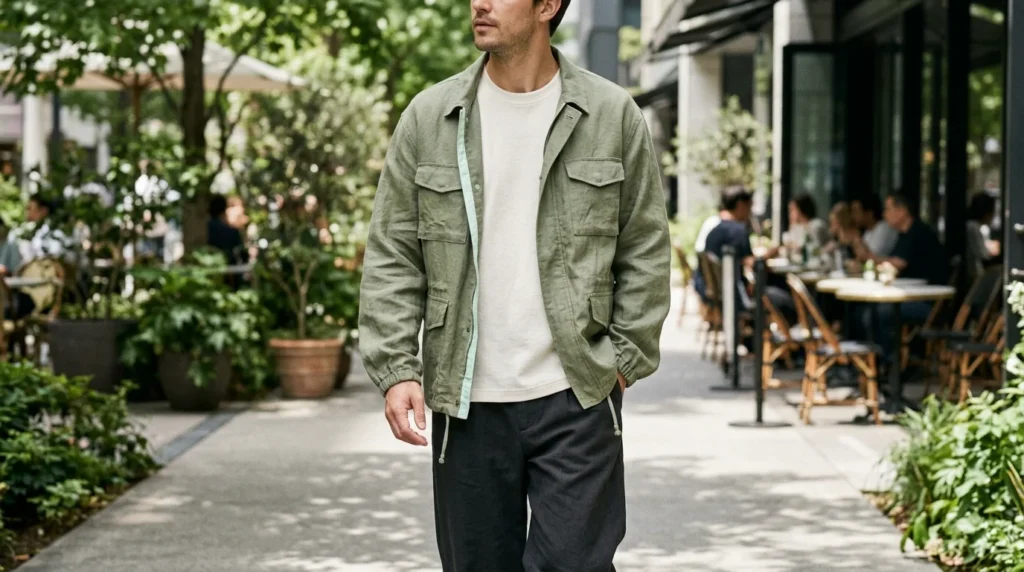
Utility jackets blend casual style with practical storage. Patch pockets make them practical for travel, sightseeing, markets, and everyday errands. Cotton versions can remain comfortable when the fabric stays relatively thin.
Choose restrained detailing if you want the piece to last beyond one trend cycle. Olive, beige, navy, and stone work with many wardrobes. A simple cut also layers easily over shirts and tees.
Pros: practical pockets, easy layering, and flexible casual styling.
Cons: multiple pockets and heavier hardware can make some designs bulky.
6. Lightweight Blazer
A lightweight blazer works when your plans demand something smarter than casual outerwear. Relaxed shoulders and breathable fabrics help reduce the stiffness associated with traditional tailoring. Linen blends are particularly common in summer collections.
John Lewis currently lists summer options ranging from linen-rich jackets to lightweight blazers. That variety shows how tailoring can work beyond offices and formal occasions.
Pros: smart appearance, flexible evening styling, and easy pairing with trousers or dresses.
Cons: structured designs can feel warm, while some fabrics need careful pressing.
Wrynia’s coverage of Kate Middleton’s fashion style provides additional inspiration for mixing tailored layers with simpler clothing. The strongest outfits usually balance one structured item against more relaxed pieces.
7. Packable Shell
A thin packable shell earns its place when forecasts are uncertain. It takes up little space in a bag and can protect against wind or passing showers. Outdoor-focused brands often add adjustable hoods and sealed construction.
TOG24 currently promotes packable women’s designs for walks, festivals, camping, and unpredictable summer showers. Check individual waterproof ratings, as protection varies by product.
Pros: compact, weather-focused, lightweight, and travel-friendly.
Cons: technical styling offers less versatility for offices, dinners, or formal events.
Which Style Gives You the Most Versatility?
For most wardrobes, a lightweight bomber or thin denim design offers the broadest everyday use. Both work across casual daytime plans and cooler evenings. They also pair easily with common wardrobe basics.
Choose a windbreaker or shell if practical weather protection matters more than appearance. Pick linen or relaxed tailoring when smarter outfits take priority. Utility designs sit comfortably between the two.
Your best purchase should solve your most frequent clothing problem. Buying for an imagined occasion often leaves you with an underused layer. Start with where you spend your real summer days.
What Colours Work Best?
Navy, stone, olive, cream, and mid-blue are reliable starting points. These shades combine easily with white, black, denim, and other common neutrals. They also work across early summer and autumn.
Brighter colours can work when the rest of your wardrobe stays restrained. Red, cobalt, yellow, and green can turn outerwear into the main outfit feature. Check whether you already own enough coordinating pieces before choosing one.
Patterns require similar thinking. Checks and stripes become easier to wear when surrounding clothing stays simple. A versatile layer should create several outfits rather than demand one exact combination.
Fit Details That Matter
Shoulder fit has a strong effect on how polished a jacket looks. Relaxed styles can drop slightly beyond the natural shoulder. Tailored pieces usually look cleaner when the seam sits closer to your shoulder point.
Sleeve length deserves equal attention. Long sleeves should remain comfortable when pushed or rolled back. Adjustable cuffs give you more control as temperatures change.
Leave enough room through the body for a light layer underneath. You shouldn’t need significant extra space for thick winter knitwear. Too much volume can make a thin design look shapeless.
Shopping Online Without Guessing
Always use the retailer’s size chart rather than assuming your usual size will fit. Brand measurements can differ, especially between fitted and oversized styles. Product descriptions should clarify the intended silhouette.
Check fabric composition before ordering. Photographs alone can’t reliably show breathability, lining thickness, or fabric weight. Reviews can also reveal whether a garment feels heavier than expected.
Return conditions matter when buying unfamiliar cuts online. Keep tags attached until you have checked the fit properly. Wrynia’s ASOS customer service guide also covers delivery, payments, returns, and account support for ASOS shoppers.
Frequently Asked Questions
What is the best summer jacket for UK weather?
No single option suits every British summer day. Lightweight bombers and denim designs provide versatile everyday styling. Packable shells make more sense when wind and showers are your main concern.
Which jacket fabric is coolest in warm weather?
Light cotton and linen blends work well when airflow matters. A loose fit can also improve comfort in warmer conditions. Always check lining and fabric weight because material names alone don’t tell the full story.
Are denim jackets too hot for summer?
Heavy denim can feel uncomfortable during hot afternoons. Lighter fabric and relaxed construction can make denim more practical. It works especially well during cooler mornings and evenings.
Should a warm-weather jacket be waterproof?
Waterproofing isn’t essential for every outfit or occasion. It becomes useful for walking, festivals, commuting, and travel when forecasts are uncertain. A separate packable shell can cover that need without replacing smarter outerwear.
Can you wear a blazer during summer?
Yes, as long as the fabric and construction suit warmer temperatures. Linen blends and lightweight, unstructured designs usually feel more comfortable than thick formal tailoring. Pair it with breathable shirts or tops to keep it comfortable.
The Best Choice Depends on How You Spend Summer
A summer jacket earns its place when it works across several realistic situations. Focus on fabric, weight, fit, weather protection, and styling flexibility before following short-lived trends. Those checks make it easier to find something you’ll wear beyond one season.
For most people, lightweight denim or a simple bomber is the easiest place to start. Travellers may get more value from a packable shell. Smarter wardrobes can benefit more from linen blends or relaxed tailoring.
Choose the layer that solves your most common weather and outfit problem first. Then consider colour, trend details, and extra features. A practical choice usually lasts longer than the most attention-grabbing design.