
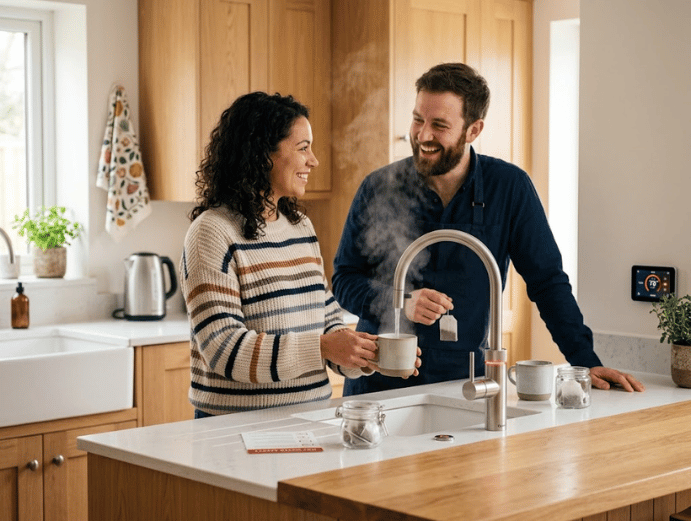
A hot water tap eliminates kettle waiting time and frees up valuable kitchen worktop space. Most systems use an insulated tank under the sink to keep water near-boiling. They suit frequent tea drinkers, busy cooks, and households planning a practical kitchen upgrade.
A boiling-water system stores heated water in a compact insulated tank beneath your sink. It can dispense near-boiling water within seconds for drinks, cooking, and cleaning. Prices vary widely, so choose based on tank capacity, safety features, filtration, maintenance, and installation requirements.
| Key point | What UK buyers should know |
|---|---|
| Typical function | Dispenses near-boiling or boiling water without waiting for a kettle |
| Common formats | Dedicated, 3-in-1, 4-in-1, and premium multifunction systems |
| Typical temperature | Many models dispense around 98–99°C, while some reach 100°C |
| Typical purchase price | Budget models can start below £500, while premium systems exceed £1,000 |
| Installation | Usually needs under-sink space, plumbing connections, and a suitable power supply |
| Ongoing costs | Electricity, replacement filters, servicing, and possible descaling |
| Key safety features | Child locks, push-and-turn controls, insulated spouts, and controlled water flow |
| Best suited to | Frequent hot-drink makers, regular cooks, and kitchens where worktop space matters |
What Is a Boiling-Water Tap and How Does It Work?
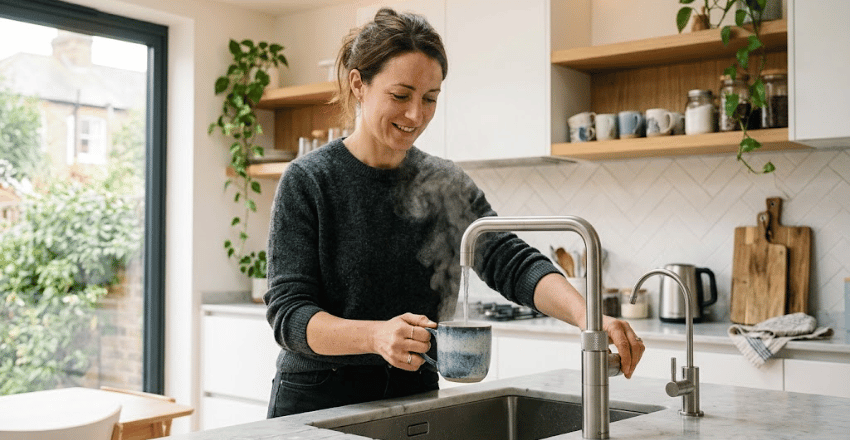
The visible tap forms only one part of the system. A small insulated boiler usually sits in the cupboard under the sink. It heats incoming mains water and keeps a limited quantity ready for immediate use.
Tank capacities vary by product, with current UK options commonly ranging from about two to seven litres. Larger tanks supply more heated water before you need to reheat. They also occupy more cupboard space, which matters in compact kitchens.
This arrangement differs from a standard mixer tap connected to your domestic hot-water system. The dedicated tank heats water much closer to boiling temperature. You can therefore make tea or start cooking without waiting for a kettle.
That convenience is especially useful where worktop space is limited. Wrynia’s small kitchen ideas guide explains why multifunction fittings can help reduce countertop clutter. Removing a permanent kettle can free up valuable prep space in a smaller kitchen.
Hot Water Tap Types: 3-in-1, 4-in-1 and Dedicated Models
Manufacturers use several labels, which can make comparisons confusing. The number usually describes the different water functions available from one fitting. Check the manufacturer’s exact specification because naming conventions sometimes vary between brands.
| Type | Typical functions | Main advantage | Main drawback |
|---|---|---|---|
| Dedicated boiling tap | Near-boiling water only | Simple additional outlet | Requires another tap for normal water |
| 3-in-1 | Normal hot, normal cold, near-boiling | Replaces a standard mixer and kettle | Usually needs an under-sink tank |
| 4-in-1 | Normal hot, normal cold, near-boiling, filtered cold | More functions from one fitting | Higher price and added filter costs |
| Premium multifunction | May add chilled or sparkling water | Can replace several separate appliances | Higher purchase and maintenance costs |
A 3-in-1 model usually suits households mainly seeking kettle-free convenience. A 4-in-1 system makes more sense when filtered drinking water also matters. Premium systems are harder to justify unless you’ll use their extra functions regularly.
Current retailers sell systems with filtered water, temperature controls, safety mechanisms, and different tap finishes. Some models provide water between roughly 88°C and 99°C rather than a true 100°C boil. Check temperature specifications if full boiling temperature matters for your intended use.
How Much Does a Hot Water Tap Cost in the UK?
Prices vary widely because specifications differ considerably. Current Which? comparisons show mainstream systems spanning several hundred pounds to well above £1,000. Premium finishes, larger tanks, chilled water, and sparkling functions can raise costs further.
A sensible budgeting approach separates the tap price from fitting and future maintenance. Checkatrade’s 2026 guide puts the average boiling-water unit at around £450, while premium products can exceed £1,000. Actual fitting charges depend on plumbing, electrical access, cabinetry, and local labour rates.
The cheapest purchase is not automatically the cheapest long-term option. Filters may need replacing several times a year, depending on the brand and local conditions. Review warranty terms and replacement-part prices before ordering.
Are Boiling-Water Taps Expensive to Run?
An insulated tank uses electricity to keep stored water hot between uses. The amount varies with tank design, capacity, temperature, household use, and electricity tariff. Filter costs can matter just as much when comparing annual ownership costs.
Which? calculated one Quooker example at £11.04 in annual electricity costs during its September 2026 comparison. That figure should not be treated as universal across every brand. Quel, for example, publishes higher consumption figures for its own different boiler system.
Buying one purely to save money against a kettle is therefore difficult to justify. The stronger reasons are speed, convenience, reduced worktop clutter, and instant access during cooking. Compare total ownership costs, not just electricity figures.
Safety Features Matter More Than Styling
Water approaching boiling temperature can cause serious scalding injuries. Good products use deliberate controls that make accidental operation harder. Common measures include child locks, push-and-turn mechanisms, insulated spouts, and controlled water delivery.
Families with young children should test the control style before purchasing. A safety mechanism should feel deliberate for adults without becoming inconvenient during normal use. Positioning also matters because children should not easily reach the activation control.
Don’t assume every system offers the same protection just because the product looks similar. Read the safety instructions and warranty requirements for the exact model. Professional installation can also reduce problems caused by incorrect plumbing or electrical connections.
Check Installation Space Before Buying
The cupboard below your sink must hold more than the visible pipework. A heated tank, filter cartridge, valves, and connecting hoses may all need room. Larger tanks can reduce storage considerably in a compact base unit.
Measure the cupboard, allowing for waste pipes and cleaning products. Also confirm the manufacturer’s electrical requirements. Some installations may need electrical work before the tap can operate safely.
Planning matters even more when the sink sits within an island. Wrynia’s kitchen island planning guide covers service planning, circulation, storage, and sink placement. Electrical and plumbing routes should be settled before expensive worktops or flooring are completed.
The sink area still needs to work for ordinary washing and food preparation. Wrynia’s washing-up bowl guide offers ideas for organising this work zone. Consider the whole cupboard and sink setup rather than treating the new fitting separately.
Filters, Limescale and Maintenance
Many systems include filtration to improve taste or protect internal components. Replacement intervals depend on the manufacturer, usage, filter design, and local water conditions. Filter prices can therefore significantly affect the real annual cost.
Hard-water areas deserve extra attention because limescale can affect water-heating equipment. Follow the manufacturer’s descaling and cartridge guidance instead of using a general household cleaning method. Using unsuitable products could damage components or affect warranty coverage.
Check replacement cartridge availability before committing to an uncommon system. Also compare warranty length, servicing options, and access to spare parts. A cheap unit becomes less attractive when routine consumables are difficult to obtain.
Main Advantages and Drawbacks
| Advantages | Drawbacks |
|---|---|
| Near-boiling water within seconds | Higher upfront cost than a kettle |
| Less waiting during cooking | Requires cupboard space beneath the sink |
| Can remove kettle clutter | Filters and servicing add ongoing costs |
| Useful for tea, coffee, and food preparation | Installation can require plumbing and electrical work |
| Multifunction versions reduce separate fittings | Very hot water requires careful safety controls |
| Filtered-water options are widely available | Premium features can raise prices considerably |
The biggest advantage is convenience, not financial savings. People who boil water repeatedly during the day are more likely to notice the benefit. Occasional hot-drink users may struggle to justify the purchase price.
The biggest hidden compromise is usually cupboard space. Showroom displays can make the installation look smaller because they don’t show the surrounding storage. Measure your real cabinet before deciding that a particular tank capacity will fit.
How to Choose the Right System
Start with the jobs you perform every day. A regular tea drinker may value rapidly heated water more than chilled or sparkling options. Paying for unused features increases both purchase complexity and potential maintenance costs.
Next, compare tank capacity, temperature, filtration, safety controls, warranty coverage, and cartridge pricing. Check whether the advertised price includes the boiler and filter system. Also establish what professional installation could add to the project.
Match the finish only after the functional decisions are settled. Chrome and stainless finishes often cost less than specialist colours or metallic coatings. A fashionable finish matters less than reliable controls and replacement parts that are easy to find.
Is a Boiling-Water Tap Worth It?
For a busy household, it can become a useful daily fitting rather than an occasional luxury. Frequent drinks, cooking, and limited worktop space strengthen the case for buying one. The time saved becomes more noticeable when boiling water is needed repeatedly.
For a household using a kettle once or twice daily, the economics are weaker. Which? notes that high purchase prices make financial payback against an efficient kettle difficult. Convenience should therefore be the main reason for buying, not promised energy savings.
The best choice is usually the simplest model that covers your genuine daily needs. Choose adequate capacity, strong safety controls, and manageable filter costs before paying for extra functions. This approach can keep both the installation and long-term ownership more practical.
Frequently Asked Questions
Is a hot water tap cheaper to run than a kettle?
Running-cost comparisons depend heavily on the model and how each household uses it. Insulated tanks consume standby electricity, while kettles use larger short bursts of energy. Purchase price and replacement filters usually matter more than electricity alone.
Do boiling-water taps really reach 100°C?
Some models reach a claimed 100°C, while many dispense closer to 98°C or 99°C. The difference may be minor for everyday drinks and cooking. Check the manufacturer’s measured outlet temperature when a true boil matters to you.
Do I need a plumber to install one?
Professional installation is the safer choice for most households. The system connects to water and requires the manufacturer’s specified electrical supply. Proper fitting can also be important to keep the product warranty valid.
How often do filters need replacing?
Replacement schedules vary significantly between systems. Current UK comparisons show intervals ranging from several months to around one year across major brands. Your local water quality and household consumption can also affect maintenance needs.
Is a 3-in-1 or 4-in-1 tap better?
A 3-in-1 model is usually enough if you want standard water plus instant hot water. A 4-in-1 version makes more sense if you also need filtered cold water. Choose based on functions you will use rather than the larger number.
Make the Decision Around Your Daily Routine
Start by counting how often your household boils a kettle during a normal day. Then measure your sink cupboard and price the filter replacements for two or three shortlisted systems. These simple checks reveal whether the convenience justifies the investment.
Compare safety controls and warranty support before focusing on colour or tap shape. Ask installers to confirm plumbing, electrical, and cupboard requirements before you order. A carefully chosen system should solve daily kitchen problems without creating new ones.
For broader kitchen planning, Wrynia’s Home Improvement section covers layouts, storage, fittings, maintenance, and renovation decisions. Use those guides to consider the tap alongside the rest of your kitchen. That broader approach helps keep every new feature useful after the renovation is finished.