

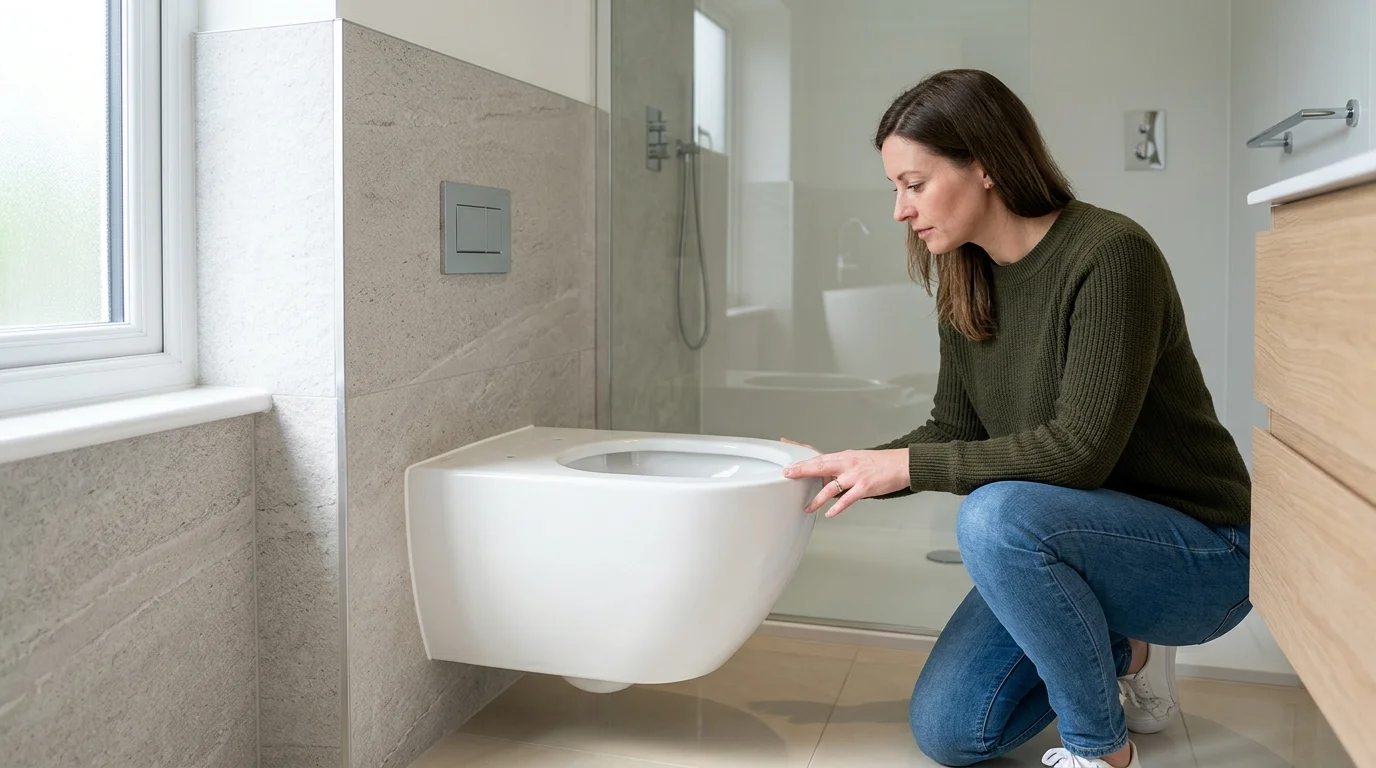
A rimless toilet removes the hidden inner rim found around a conventional toilet bowl. Water instead travels around the exposed bowl through directed outlets or channels. This design can make regular cleaning quicker because fewer concealed surfaces collect dirt and limescale.
For UK homeowners, the main benefits are easier cleaning, accessible bowl surfaces, and a modern range of designs. Flush performance still depends on the specific pan, cistern, and installation. Price, projection, waste position, flush volume, and seat inclusion all deserve checking before you buy.
A rim-free WC removes the enclosed channel beneath the traditional bowl edge. Its flush directs water around the exposed ceramic instead. This makes more of the bowl reachable during cleaning, although good performance still depends on the pan design, correct installation, water delivery, and regular maintenance.
| What to check | Practical UK buying advice |
|---|---|
| Main benefit | Easier access to bowl surfaces during cleaning |
| Flush design | Directed water flow rather than a concealed rim channel |
| Common styles | Close-coupled, back-to-wall, wall-hung, compact, comfort-height |
| Current pricing | Budget options start below £100, while premium systems cost considerably more |
| Main concern | Poorly designed or incorrectly adjusted models may splash |
| Hard-water issue | Exposed outlets can still collect limescale |
| Installation check | Measure projection, waste position, water inlet, and available space |
| Useful extras | Soft-close seat, dual flush, concealed cistern, comfort height |
Key Takeaways
- Rim-free bowls usually make hidden dirt and limescale easier to spot and remove.
- The technology does not mean the toilet cleans itself.
- Flush quality varies between brands, bowl shapes, and cistern settings.
- Close-coupled models are often simpler for straightforward replacement projects.
- Wall-hung and back-to-wall designs can create a cleaner visual finish.
- Measure the room and existing plumbing before choosing a specific model.
- Check what comes in the box, because seats and cisterns are not always included.
What Is a Rimless Toilet and How Does It Work?
Traditional toilet pans usually contain a covered channel beneath the upper bowl edge. Water passes through that channel and exits through holes during flushing. Those concealed surfaces can be awkward to inspect and clean properly.
Rim-free designs remove most or all of that enclosed overhang. Manufacturers then shape the pan and water outlets to direct the flush around the bowl. Different brands use different systems, so the water pattern can vary between models.
The design change is mainly about accessibility and water distribution. It does not guarantee lower water use or a stronger flush by itself. Check the stated flush volumes and product specifications before making those assumptions.
Rim-Free Toilets Versus Traditional Toilets
| Feature | Rim-free design | Traditional rimmed design |
|---|---|---|
| Cleaning access | Most bowl surfaces are visible | Hidden areas sit beneath the rim |
| Limescale inspection | Easier to see around flush outlets | Deposits can form inside concealed channels |
| Flush system | Directed channels or outlets | Water normally travels beneath the rim |
| Design choice | Available across many modern WC types | Available across many traditional styles |
| Splash risk | Depends heavily on design and setup | Usually contained by the enclosed rim |
| Maintenance | Accessible outlets need occasional descaling | Hidden rim holes may need descaling |
The biggest everyday difference is cleaning access. You can see more of the ceramic surface without reaching beneath a deep overhang. That makes routine wiping and inspection less awkward.
A conventional toilet can still work perfectly well when maintained properly. Choosing between the two designs is therefore not purely about flushing strength. Cleaning preferences, budget, bathroom layout, and product quality matter as well.
What Are the Main Benefits?
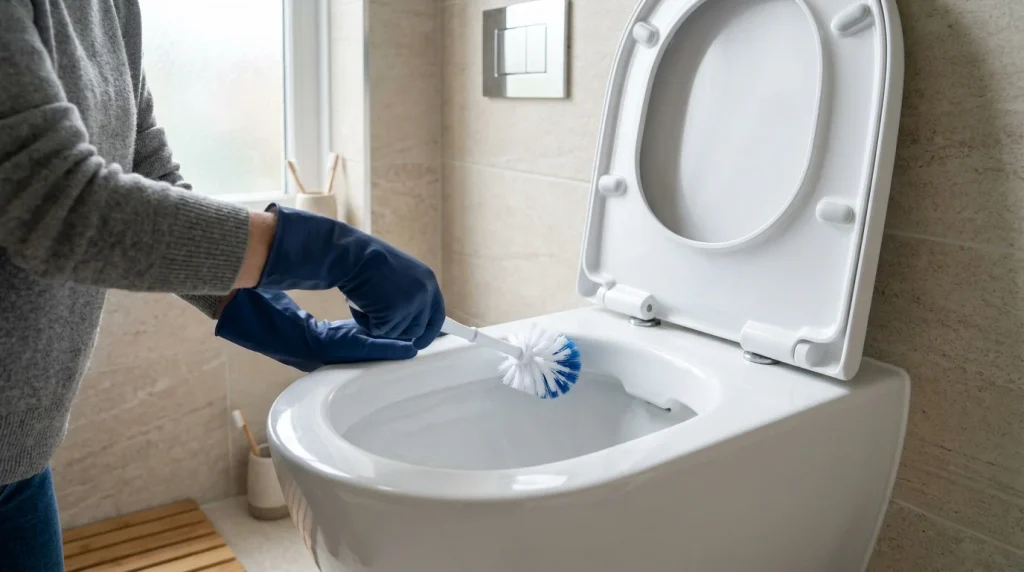
Easier Cleaning
Removing the enclosed rim means fewer inaccessible surfaces remain inside the pan. Dirt is easier to notice before deposits become heavy. A normal toilet brush can also reach more of the visible bowl.
This can be useful in busy family bathrooms or frequently used cloakrooms. Regular cleaning is still required, despite the easier access. No bowl design eliminates the need for proper hygiene.
Fewer Hidden Limescale Deposits
Hard water can leave mineral deposits wherever water repeatedly passes over ceramic or fittings. A conventional rim can hide those deposits until they become difficult to remove. An open bowl makes many affected areas easier to inspect.
The flush outlets themselves can still scale over time. This matters in harder-water parts of the UK. Follow the manufacturer’s cleaning guidance and avoid products that may damage surfaces or fittings.
More Choice Than You Might Expect
Rim-free technology is no longer limited to expensive wall-hung sanitaryware. UK retailers now stock close-coupled, compact, back-to-wall, wall-hung, and comfort-height versions. This gives buyers more freedom to match the pan with their existing bathroom layout.
External styling also varies widely. You can choose rounded, square, traditional-looking, or minimalist forms without changing the underlying principle. The internal bowl design does not dictate the appearance of the whole bathroom.
Are There Any Disadvantages?
Splashing is the concern buyers mention most often. A well-designed pan should keep flush water inside the bowl. Poor geometry or an unsuitable cistern setting can make splashing more noticeable.
Modern designs have improved water control considerably. Even so, performance varies between products and installation conditions. Check owner reviews for the exact model rather than judging every rim-free design together.
Price can also be higher than the cheapest basic rimmed WCs. The gap has narrowed because this technology is now common across mainstream ranges. Installation costs may matter more than the pan price when concealed frames or furniture are needed.
How Much Do Rim-Free Toilets Cost in the UK?
Current UK prices cover a broad range because packages include different components. Plumbworld currently lists examples around £100 for some models, with others above £200. Wickes also shows products across budget, mid-range, and higher price points.
Large comparison listings show even wider prices across thousands of products. Those figures can include pan-only listings, premium brands, frames, cisterns, and complete packs. Compare like with like before deciding whether one model offers better value.
A cheap pan is not automatically a cheap finished installation. You may also need a seat, cistern, flush plate, frame, connector, isolation valve, or professional fitting. Check the package contents before comparing headline prices.
Which Type Should You Choose?
Close-Coupled
A close-coupled WC places the cistern directly behind the pan. This familiar arrangement can simplify many replacement projects. Access to internal cistern parts is usually straightforward.
It can suit homeowners who want easier installation without concealed bathroom furniture. Measure the total projection before ordering. Compact versions can help where floor space is restricted.
Back-to-Wall
A back-to-wall pan hides the cistern inside furniture or behind a suitable wall arrangement. The visible ceramic sits neatly against the finished surface. This can reduce exposed pipework and simplify exterior cleaning.
Installation needs more planning than many close-coupled replacements. You still require safe access to the concealed cistern for future servicing. Check the access arrangement before tiles or furniture are permanently finished.
If you are planning surrounding finishes, Wrynia’s bathroom tiles guide covers floor suitability and wet-area choices. Plan the sanitaryware position before finalising tile cuts. This reduces awkward joints around the finished pan.
Wall-Hung
Wall-hung pans leave the floor beneath the toilet visible. A concealed frame supports the WC and holds the cistern. The effect can make a compact bathroom feel less visually crowded.
The frame and wall construction must suit the installation. Servicing access also needs consideration before the wall is closed. Professional fitting is sensible where structural support or concealed plumbing needs alteration.
What Should You Check Before Buying?
Start by measuring the available width and projection from the finished wall. Then note the position of the existing soil connection and water supply. A visually compact pan may still require plumbing changes that increase installation costs.
Check whether the advertised price covers the pan alone or a complete package. A soft-close seat, cistern, frame, flush plate, or connector may be sold separately. Product descriptions should make each included component clear.
Review the stated flush volume rather than assuming rim-free automatically means water-saving. Some current models combine the design with dual-flush cisterns. The exact water use depends on the product and cistern specification.
If you are replacing flooring too, Wrynia’s self-adhesive floor tiles guide explains surface preparation and bathroom suitability. Finish levels around a WC need careful planning. Flooring should not hide leaks or unstable plumbing connections.
Wet joints also need the correct sealing product. Standard paintable decorating filler is unsuitable beside repeatedly wet sanitary joints. Wrynia’s decorators caulk guide explains where sanitary silicone is the better choice.
Cleaning and Maintenance Tips
Clean the visible bowl regularly rather than waiting for scale or staining to build. Pay particular attention to the water outlets where mineral deposits may develop. Follow the ceramic and fitting manufacturer’s approved cleaning instructions.
Avoid assuming stronger chemicals always produce a better result. Some cleaners can affect seals, fittings, decorative finishes, or specialist surface coatings. Check the product care guidance before using concentrated descalers.
If the flush pattern changes, inspect accessible outlets for deposits before assuming the toilet is faulty. Persistent splashing or weak flushing may also indicate a setup issue. A plumber can check cistern settings and installation where simple cleaning does not help.
Is a Rim-Free Design Worth Choosing?
For many UK bathrooms, the cleaning advantage makes it a sensible option. The open bowl removes one of the most awkward areas found on traditional toilets. Buyers also have enough design choice to avoid compromising on style.
Quality matters more than the word printed on the product description. Compare dimensions, flush specifications, included parts, warranty, and installation requirements. A well-matched product is more valuable than choosing the cheapest model carrying the feature.
The most practical approach is to measure first and compare complete installation costs. Then shortlist models from established retailers or manufacturers with clear technical information. That approach reduces the risk of buying a pan that does not suit your plumbing.
Frequently Asked Questions
Is a rimless toilet worth it?
It can be worth choosing if easier bowl cleaning is a priority. The missing enclosed rim gives better access to areas that normally collect deposits. You should still compare price, flush design, measurements, and installation requirements.
Do rim-free toilets splash?
Good models are designed to keep water inside the pan during flushing. Splashing can still occur with poor bowl geometry or unsuitable water delivery. Reviews for the exact product can reveal whether buyers frequently report that problem.
Do they use less water?
Some use low-volume or dual-flush systems, but the bowl design alone does not guarantee lower consumption. Water use is determined by the complete flushing system. Check the manufacturer’s stated litres per flush before comparing models.
Are they easier to clean?
They are usually easier to inspect and wipe because there is no deep enclosed rim. More of the ceramic surface remains visible and reachable. Regular cleaning is still necessary to control staining, scale, and residue.
Can I replace a normal toilet with a rim-free model?
Often you can, but dimensions and plumbing connections must match the intended installation. Measure the waste position, width, projection, and water connection first. A plumber may need to alter pipework when the replacement layout differs.
Choose the Design Around Your Bathroom
Rim-free toilets solve a genuine cleaning problem by removing hidden bowl surfaces. Their value still depends on good design, correct measurements, and proper installation. A little checking before purchase can prevent expensive changes later.
Compare complete packages rather than pan prices alone. Check flush volumes, seat inclusion, cistern requirements, projection, and maintenance access. For more practical renovation guidance, browse Wrynia’s Home Improvement guides.