
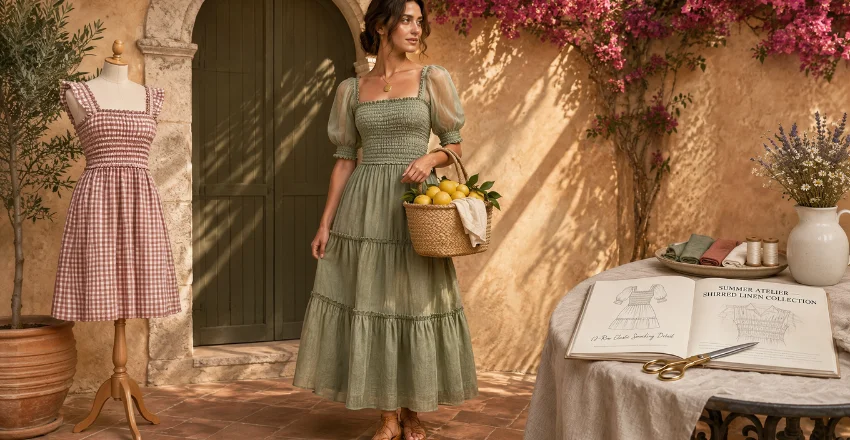
A shirred dress combines gathered fabric with rows of elastic stitching, creating stretch without losing shape. That flexible construction can make dresses comfortable for warm days, holidays, casual weekends, and summer events. The key is choosing the right placement, fabric, length, and overall cut.
A shirred design uses elastic stitching to gather fabric while allowing it to stretch comfortably. The detail may sit across the bust, waist, back, or sleeves. For most UK wardrobes, a breathable midi with secure shirring offers the easiest mix of comfort, coverage, and styling flexibility.
| What to check | Why it matters | Practical choice |
|---|---|---|
| Shirring position | Changes fit and support | Bust, waist, back, or full bodice |
| Length | Affects coverage and occasion | Mini, midi, midaxi, or maxi |
| Fabric | Influences comfort and drape | Cotton, viscose, linen blend, jersey |
| Neckline | Changes styling and support | Square, scoop, V-neck, bandeau |
| Sleeves | Affects season and coverage | Strappy, short, puff, or long |
| Stretch | Determines comfort | Should recover without feeling restrictive |
| Care instructions | Helps preserve elasticity | Follow the sewn-in label |
Quick Takeaways
- Midi lengths give many UK wardrobes the widest range of styling options.
- Shirred bodices offer more stretch than fixed, structured bodices.
- Cotton and lighter blends can feel comfortable during warmer weather.
- Sleeve length and layering determine how far the dress works beyond summer.
- Check retailer measurements instead of assuming your normal UK size will fit.
- A versatile colour usually gives you more repeat outfits than a difficult print.
What Is a Shirred Dress and Why Is It So Wearable?

Shirred Dress is a sewing technique that creates gathered sections using elasticated thread. The finished panel stretches when worn and contracts when released. Designers commonly place it across the bodice, waist, cuffs, or back.
That stretch explains much of the style’s appeal. A structured zip dress needs a closer match between your measurements and the garment. Shirred sections give the fabric more room to adapt as you move.
Current UK retailers offer the detail across minis, midis, maxis, casual dresses, and occasion-led designs. You will also find square necklines, puff sleeves, straps, and bandeau cuts. This variety makes the construction more useful than a single seasonal trend.
How Shirring Changes the Fit
Shirring can create a closer fit without using rigid boning or a fixed waistband. A fully shirred bodice often stretches across both the bust and waist. A shirred back gives flexibility while leaving the front more structured.
Placement matters when you compare two similar dresses. Bust shirring can create a fitted upper section above a looser skirt. Waist shirring instead shapes the middle while leaving more freedom around the chest.
The elastic should feel secure without digging into your skin. It should also return to its original shape after stretching. If the panel stays overstretched, the garment may lose its intended silhouette.
Measurements still matter despite the extra flexibility. Compare your bust, waist, and hip measurements with the retailer’s current chart. This is more reliable than choosing solely from your usual UK dress size.
Mini, Midi or Maxi: Which Length Should You Choose?
Different lengths change both the appearance and usefulness of a gathered dress. Your height, preferred coverage, footwear, and occasion should guide the decision. The most versatile option is not identical for every wardrobe.
| Length | Best suited to | Main advantage | Consider before buying |
|---|---|---|---|
| Mini | Holidays, casual days, nights out | Light and easy to style | Check sitting and walking coverage |
| Midi | Weekends, work-friendly outfits, events | Broad styling range | Hem position varies with height |
| Midaxi | Smart casual dressing and holidays | Extra movement and coverage | Can overwhelm petite frames |
| Maxi | Holidays, summer events, relaxed evenings | Creates a complete outfit quickly | Check length with flat shoes |
Verdict: Start with a midi if you want the easiest all-round option. It works with trainers, sandals, flats, ankle boots, and several jacket styles. Choose another length when your preferred coverage or occasion makes it more practical.
A knee-skimming alternative can also work when full midi lengths feel too long. Wrynia’s knee-length skirt guide explains how hem position changes outfit proportions. The same principle can help when comparing dress lengths.
Which Fabrics Work Best in UK Weather?
Fabric affects comfort as much as the elasticated construction. Cotton can work well for warm weather because it usually feels light and familiar. Fabric weight still matters, so always check the full product description.
Linen blends can offer a crisp summer appearance with useful airflow. They may crease more visibly than synthetic fabrics during long days. Blended fibres can reduce creasing while changing how the material feels.
Viscose is common in flowing dresses because it can produce a softer drape. Lightweight versions work well for loose skirts and summer silhouettes. Care instructions vary, so check the label before washing.
Jersey creates a different result because the base fabric already contains stretch. It can feel comfortable for casual wear and travel. The finished dress may look less structured than a woven cotton version.
British weather also makes layering useful. A denim jacket, cardigan, lightweight blazer, or cropped layer can extend wear into cooler days. Wrynia’s summer jacket guide has more ideas for light outerwear in changeable conditions.
Seven Easy Ways to Style It
1. Keep a Casual Midi Simple
Wear a midi design with clean trainers and a small crossbody bag. This combination works for shopping, lunches, and relaxed weekend plans. A denim layer adds warmth without making the outfit too formal.
2. Add Flat Sandals for Summer
Flat sandals suit lightweight cotton and linen-blend styles. Keep jewellery simple when the fabric already has a strong print or textured bodice. A woven bag can add another summer texture without competing with the dress.
3. Use a Blazer for a Smarter Look
A relaxed blazer creates structure beside softer gathered fabric. Choose a clean shape without excessive detailing or bulky shoulder construction. Loafers or simple flats can complete a polished daytime outfit.
4. Wear Boots During Transitional Weather
Ankle or knee-high boots can move a midi into early autumn. Add a cardigan, leather jacket, or light trench when temperatures fall. Darker floral prints and neutral colours usually make the seasonal shift easier.
5. Choose a Maxi for Holiday Evenings
A lightweight maxi reduces the need for complicated holiday styling. Flat sandals, simple jewellery, and a small bag can take it from daytime to sunset plans. Wrynia’s Ibiza outfits guide offers more ideas for adaptable holiday clothing.
6. Dress Up a Plain Colour
A black, navy, chocolate, or deep green design gives accessories more room to stand out. Try a stronger bag, metallic jewellery, or more polished footwear for dinner. Keeping the dress simple also makes repeat styling easier.
7. Balance Decorative Details
Puff sleeves, bows, florals, and square necklines can all add visual interest. Let one or two features become the focus rather than combining too many. Simple shoes and understated accessories help create that balance.
Which Shirring Position Is Best?
A fully elasticated bodice offers the greatest amount of visible stretch. It can suit casual summer dresses where comfort is a priority. Check strap placement and neckline security before deciding on size.
A shirred waist gives definition without fitting tightly across the entire torso. This construction often appears with flowing skirts and looser tops. It can be useful when you prefer shape around the waist with more space elsewhere.
Back shirring is a subtler option. The front can retain darts, seams, or a more tailored appearance. The elasticated rear panel then provides extra movement and sizing flexibility.
Sleeve and cuff shirring is more decorative than supportive. It helps puff sleeves keep their shape while remaining easy to move in. Check whether the cuff feels comfortable when you bend your arms.
What Should You Check Before Buying Online?
Start with the garment measurements rather than the model photograph. Images help you understand shape, but height changes where waistlines and hems sit. Compare the listed dress length with a similar garment you already own.
Read the fabric composition before ordering. A cotton-rich woven dress will behave differently from viscose or stretchy jersey. Lining can also change warmth, opacity, and movement.
Look closely at the shirring itself. Check whether it covers the entire bodice or only a narrow panel. This tells you where the dress can stretch and where accurate sizing matters more.
Neckline security deserves attention, especially with bandeau or wide square-neck styles. Adjustable straps can provide more control than fixed straps. Product reviews may also reveal whether a neckline shifts during normal movement.
Check the retailer’s latest return conditions before removing tags. Trying several sizes can be useful when you are unfamiliar with a brand. Keep everything intact until you know which fit you intend to keep.
How to Make the Dress Work Beyond Summer
Summer dresses do not always need to disappear when temperatures drop. Start with a cardigan, denim jacket, or lightweight blazer during mild weather. Add closed shoes when sandals no longer feel practical.
Long-sleeved versions need even less seasonal adjustment. Try them with boots and a short jacket during autumn. Avoid adding too many loose layers if the skirt already has plenty of volume.
Colour can also help a dress move between seasons. Black, navy, burgundy, brown, and darker prints often pair naturally with autumn footwear. Pale shades can still work when you add deeper accessories or outerwear.
Texture offers another way to change the mood. A soft knit makes gathered cotton feel more relaxed during cooler months. Wrynia’s guide to satin lace shorts also explains how contrasting textures can make seasonal outfits feel more intentional.
The Best Choice for Most UK Wardrobes
For broad everyday use, a breathable midi with moderate bodice shirring is the strongest starting point. It gives you enough stretch without depending on an oversized silhouette. The length also works with more footwear and outerwear choices.
Choose a mini when warm-weather dressing and shorter proportions are your priority. Pick a maxi when you prefer extra coverage or want an easy holiday outfit. Neither is automatically better than a midi if another length suits your wardrobe.
Your final decision should come from fit rather than trend language. Check measurements, fabric, neckline, and shirring placement before buying. A good choice should already work with several pieces you own.
Build the Outfit Around Your Real Wardrobe
The most useful dress is one you can wear without buying an entirely new outfit around it. Check which jackets, shoes, bags, and layers you already own before choosing a colour. That simple step can make the purchase easier to repeat throughout the season.
Start with fit, fabric, and preferred coverage, then consider decorative details. A well-chosen design can move from casual weekends to holidays and smarter occasions with small styling changes. Browse Wrynia’s wider fashion coverage for more practical ways to build adaptable UK outfits.
Frequently Asked Questions
Is a shirred dress flattering?
It can create a defined shape because gathered panels stretch close to the body. The result depends on placement, fabric, neckline, and skirt shape. Choose the silhouette that makes you comfortable rather than relying on universal fit claims.
Does shirring stretch over time?
Elasticated stitching can lose recovery through repeated wear, heat, or unsuitable washing. Following the garment’s care label can help preserve the construction. Avoid assuming every elasticated dress needs the same washing method.
Should you size down in a shirred dress?
Do not size down automatically because the bodice stretches. A smaller size may change the neckline, armholes, skirt placement, and overall length. Compare your measurements with the specific retailer’s current chart first.
Can you wear shirred styles to a wedding?
Some versions can suit relaxed weddings and summer celebrations. Look for polished fabric, an appropriate length, and a secure neckline. The invitation, venue, and stated dress code should guide your final choice.
What shoes work with a gathered summer dress?
Trainers and flat sandals create an easy daytime look. Loafers, ballet flats, and ankle boots can make a midi feel more structured. A simple heel works when you want a dressier result for evenings or events.