

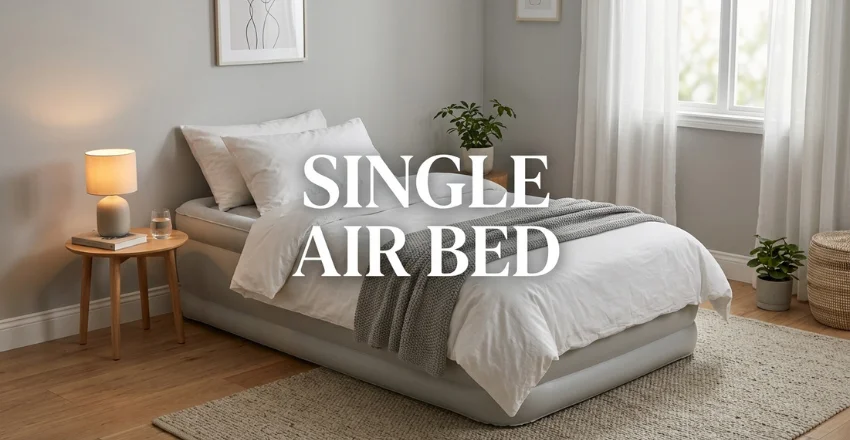
A single air bed gives one person a temporary sleeping space without committing a room to a permanent bed. The right model depends on whether you need it for guests, camping, festivals, or occasional emergencies. UK buyers should compare inflated size, height, pump type, packed size, weight limit, and repair options before paying.
For most UK homes, choose a raised inflatable mattress with a built-in mains pump for occasional guests. Choose a lower, lighter model for camping, especially if storage and portability matter. Always check the inflated dimensions, weight limit, pump type, packed size, and repair options before buying.
| Buying factor | Good starting point | Why it matters |
|---|---|---|
| Main use | Guests, camping, festivals, or sleepovers | Your use decides the ideal height, pump, and packed weight |
| Inflated size | Check exact centimetres, not only the “single” label | Inflatable models do not follow one fixed UK size |
| Height | About 18–28 cm low profile; 35–46 cm raised | Raised designs are easier to sit on and leave |
| Pump | Built-in mains, foot pump, or separate pump | Power access changes which option is practical |
| Surface | Flocked or soft-touch top | It feels softer and can help bedding stay in place |
| Current price | Roughly £10 to £120+ | Features and height can change the price sharply |
| Storage | Check packed dimensions and carry bag | A spare bed is useful only if you can store it |
Key takeaways
- Choose a raised model with a built-in electric pump for frequent overnight guests.
- Choose a low, lighter inflatable for camping, festivals, and easier transport.
- Measure the room or tent before ordering, including space around doors and furniture.
- Check actual dimensions because inflatable singles can differ from a standard UK single mattress.
- Keep the receipt, repair patch, pump accessories, and storage bag together between uses.
What Makes a Good Single Air Bed?
A good single air bed should fit the available space, hold pressure reliably, and match your preferred setup method. Comfort also depends on height, surface texture, firmness, bedding, and how much room the sleeper has. A higher price can buy convenience, but it does not remove the need to check dimensions and limits.
Current UK listings show low manual models, foot-pump beds, and raised electric-pump designs. Each suits a different situation, so no one-size-fits-all answer exists. The practical choice starts with where you’ll use the bed most often.
Start With How You Will Use the Bed
For home guests, convenience and access usually matter more than packed weight. A raised model can feel more familiar because the sleeper sits farther from the floor. Built-in mains pumps also make inflation and deflation easier when a socket is nearby.
Camping changes the priorities because every centimetre of tent floor matters. Low-profile models are easier to carry and usually leave more headroom inside smaller tents. Measure the sleeping compartment before buying, then allow space for bags and movement.
Compare the Main Types Before Buying
| Type | Current UK price guide | Typical height | Strong points | Trade-offs |
|---|---|---|---|---|
| Basic low-profile inflatable | About £10–£30 | About 18–22 cm | Cheap, light, compact | Separate pump may be needed; close to floor |
| Low model with foot or manual pump | About £15–£35 | About 20–28 cm | No mains socket needed; useful outdoors | Inflation takes more effort |
| Raised model with built-in mains pump | About £60–£120+ | About 35–46 cm | Fast setup; easier access; guest-friendly | Heavier, bulkier, needs power for easiest setup |
Current retailer listings support these broad bands, although promotions change quickly. Argos lists basic singles and premium raised options, while Decathlon carries many inflatable mattresses. Review current retailer listings before treating any price as fixed.
Recommendation: choose a raised model with a built-in mains pump for most indoor guest use. Choose a low manual or foot-pump model when camping portability matters more than height. This split gives you a clearer decision than choosing by price alone.
Check the Size Against Your Room, Tent, and Bedding
A standard UK single mattress measures 90 x 190 cm. That figure comes from Which?, which publishes a UK mattress size guide. Inflatable singles can be narrower, wider, shorter, or taller than that familiar size.
Current examples range from about 185 x 70 cm to about 191 x 97 cm, not including height. That difference affects floor space and how a fitted sheet sits. Check the manufacturer’s length, width, and depth before buying bedding.
Measure the intended floor area with the bed fully inflated. Leave clearance for doors, wardrobes, radiators, and the route through the room. Wrynia uses the same circulation-first principle in its small kitchen ideas guide.
Choose the Right Pump for Where You Sleep
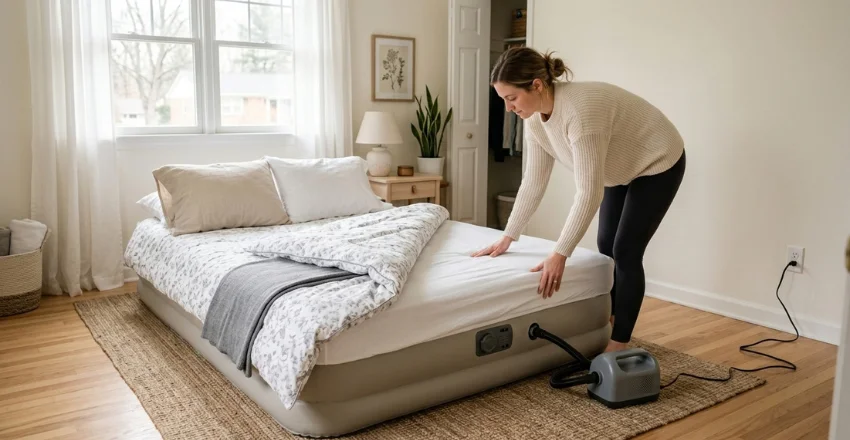
A built-in mains pump is the easiest option for indoor guest use. Current raised models can inflate within minutes and reverse the airflow for faster packing. The trade-off is extra weight, higher cost, and dependence on a nearby socket.
A foot pump or separate manual pump makes more sense when reliable power isn’t available. Rechargeable pumps can work well for car camping, but you’ll need to charge them before the trip. Check whether the valve also accepts a manual pump as a backup.
Do not assume the pump is included because the product image shows an inflated bed. Some budget models require a separate inflator, while others include one. Read the “what is included” section before comparing prices.
Comfort Depends on More Than Mattress Height
A flocked top can feel softer than exposed PVC and may reduce sheet movement. Internal coil or beam structures can affect how evenly the surface supports body weight. Firmness still needs adjustment, because too much pressure can feel hard, while too little can cause sagging.
Raised models can make sitting down and standing up easier for many adults. They also feel more bed-like in a guest room because the sleeper is farther from the floor. A lower design may suit camping better because it saves packed weight and tent headroom.
Why an Inflatable Bed Can Feel Softer by Morning
A small firmness change does not always mean the bed has a puncture. PVC can stretch during early uses, and temperature changes can alter pressure inside the mattress. Hi-Gear’s current product guidance notes stretching from pressure, use, and temperature changes.
A noticeable collapse is different from a modest pressure change. Check the valve first, then inspect seams and the base for small leaks. Which? tests air beds for overnight deflation, comfort, durability, noise, and ease of use.
How Much Should You Spend in the UK?
Budget models can work well for rare sleepovers or short camping trips. Current UK listings include low-profile singles around £10–£30, with some foot-pump options below £35. These choices make sense when compact storage and low upfront cost matter most.
Raised electric-pump designs usually cost more because they add height, structure, and inflation hardware. Current listings commonly sit around £60–£120 or more, depending on brand and features. Compare live listings at Argos and Decathlon before ordering.
This guide uses UK retailer listings and independent sources checked in September 2026. Wrynia has not laboratory-tested any of the products named here. Prices, stock, dimensions, and promotional discounts can change after publication.
Five Steps Before You Order
- Measure the sleeping area. Record the usable length and width, not the room’s headline dimensions.
- Choose the main use. Decide whether the bed is mainly for guests, camping, festivals, or emergencies.
- Pick the pump type. Match mains, rechargeable, foot, or manual inflation to the places you will use it.
- Check comfort details. Compare height, top surface, weight limit, internal structure, and bedding fit.
- Plan storage. Check folded dimensions, carry bag, pump accessories, and where everything will live.
If storage is tight, plan the packed location before you buy. Under-bed space or a wardrobe shelf can work better than a crowded hallway cupboard. Wrynia’s shoe storage ideas offer useful small-space storage principles.
Common Buying Mistakes to Avoid
- Buying by the “single” label without checking centimetres.
- Choosing a mains-only setup for camping without a practical power plan.
- Ignoring the packed size because the inflated dimensions look compact.
- Assuming every model includes a pump, repair patch, or carry bag.
- Paying for extra height when the bed must fit inside a low tent.
- Treating repeated major overnight deflation as normal behaviour.
The Verdict: Which Type Should You Buy?
For most UK homes, a raised inflatable mattress with a built-in mains pump is the strongest guest-room choice. For camping, a lighter low-profile model with manual or portable inflation is usually more practical. Match the bed to its main job, then compare size, pressure retention, packed dimensions, and warranty support.
Do not pay extra for features you will rarely use. Spend more when faster setup, easier access, and repeated guest use justify the difference. For more practical UK home-buying guides, browse Wrynia’s Home Improvement section.
Frequently Asked Questions
What size is a single air bed in the UK?
No single inflatable size is used by every manufacturer. Current single models can be around 185–191 cm long and roughly 70–97 cm wide. Always compare the exact dimensions with your room, tent, and bedding.
Is a single inflatable mattress the same size as a normal UK single bed?
Not always, because a standard UK single mattress is 90 x 190 cm. Inflatable products can be narrower or wider, even if they use the same “single” label. Measure the product rather than relying on the category name.
Is a raised model better for overnight guests?
A raised model is often easier to sit on and stand from. It can also feel more familiar in a bedroom than a low camping-style mattress. A lower design may still be better if storage, weight, or tent height matters more.
Do I need a built-in electric pump?
You don’t need one, but it can make setup much faster. Manual and foot pumps remain useful when sockets are unavailable or portability matters. Check whether the valve supports a backup pump before relying on one inflation method.
How do I stop an inflatable mattress losing air overnight?
Start by checking the valve, seams, and underside for obvious leaks. Allow for some early material stretch and pressure changes caused by temperature. Repeated major deflation should be treated as a fault or leak, not normal settling.